














Built for repair benches that need stable, precise output
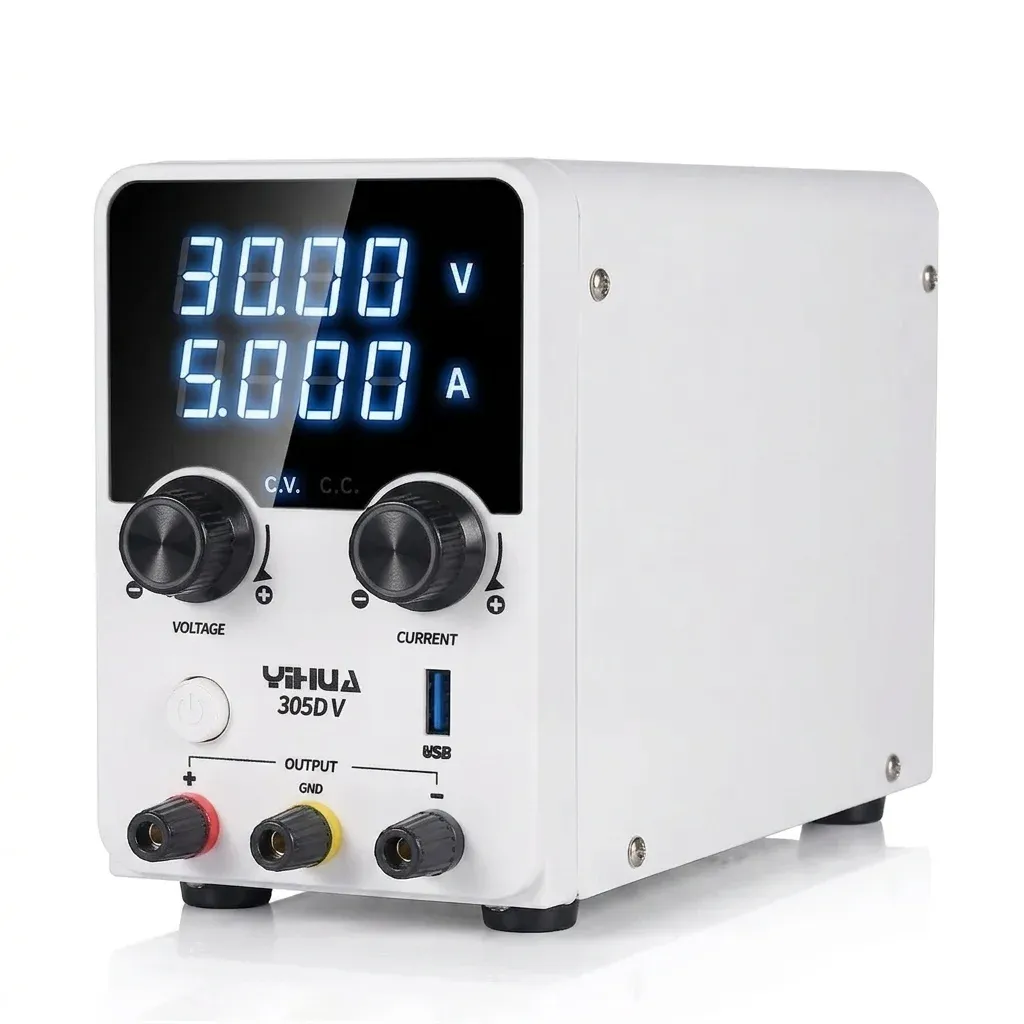
YIHUA has earned a solid reputation in the AliExpress electronics niche by focusing on workshop tools that feel engineered rather than improvised. Its bench supplies are known for practical controls, accurate regulation, and a layout that makes daily repair work faster, which is exactly what this 305D-V is designed to deliver.
This model solves a common bench problem: needing a clean, adjustable DC source instead of guessing with adapters or improvised test leads. For phone repair, board diagnostics, LED testing, and small motor checks, that kind of control matters more than raw wattage, so what does 30V and 5A actually mean in use?
30V and 5A in real workshop terms
The 0-30V range covers most low-voltage electronics, from charging circuits to logic boards and small automotive modules. With up to 5A available, it has enough headroom for many repair tasks without feeling oversized for a crowded bench.
The 180W rating is the real limiter to keep in mind, because voltage and current cannot both sit at their maximum continuously. In practice, that means the supply is best treated as a precision repair instrument rather than a substitute for heavier industrial gear, which is where many buyers make the wrong comparison.
Accuracy that matters when a board is already fragile
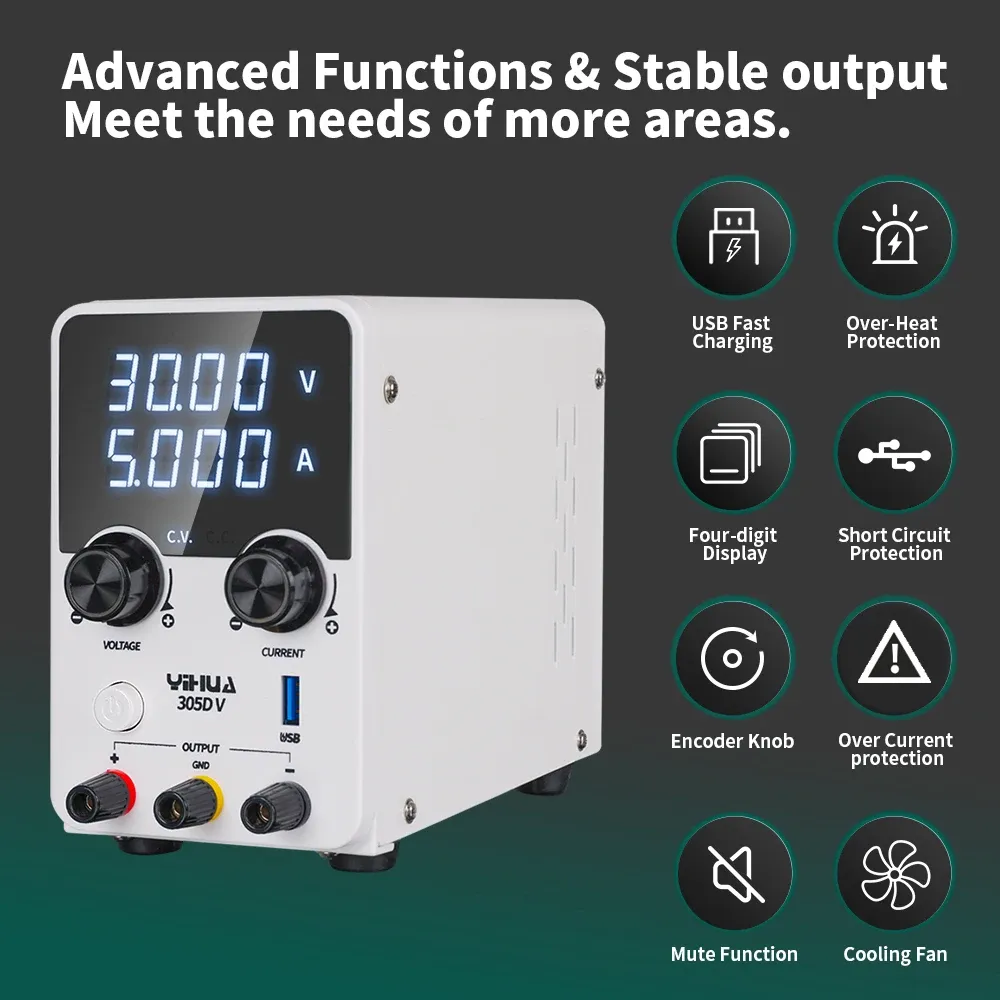
YIHUA lists voltage accuracy at less than 0.1% plus 0.03V and current accuracy at less than 0.3% plus 3mA, which is a strong sign for calibration-sensitive work. On a bench, that translates into fewer surprises when you are tracing faults, checking current draw, or bringing a circuit up slowly after repair.
Load regulation under 1% plus 10mA suggests the output should stay steady when the connected device changes demand. That stability is one of the quiet advantages of a switching laboratory supply, because a wandering output can waste time and make a healthy board look faulty.
Why the single output setup suits repair desks
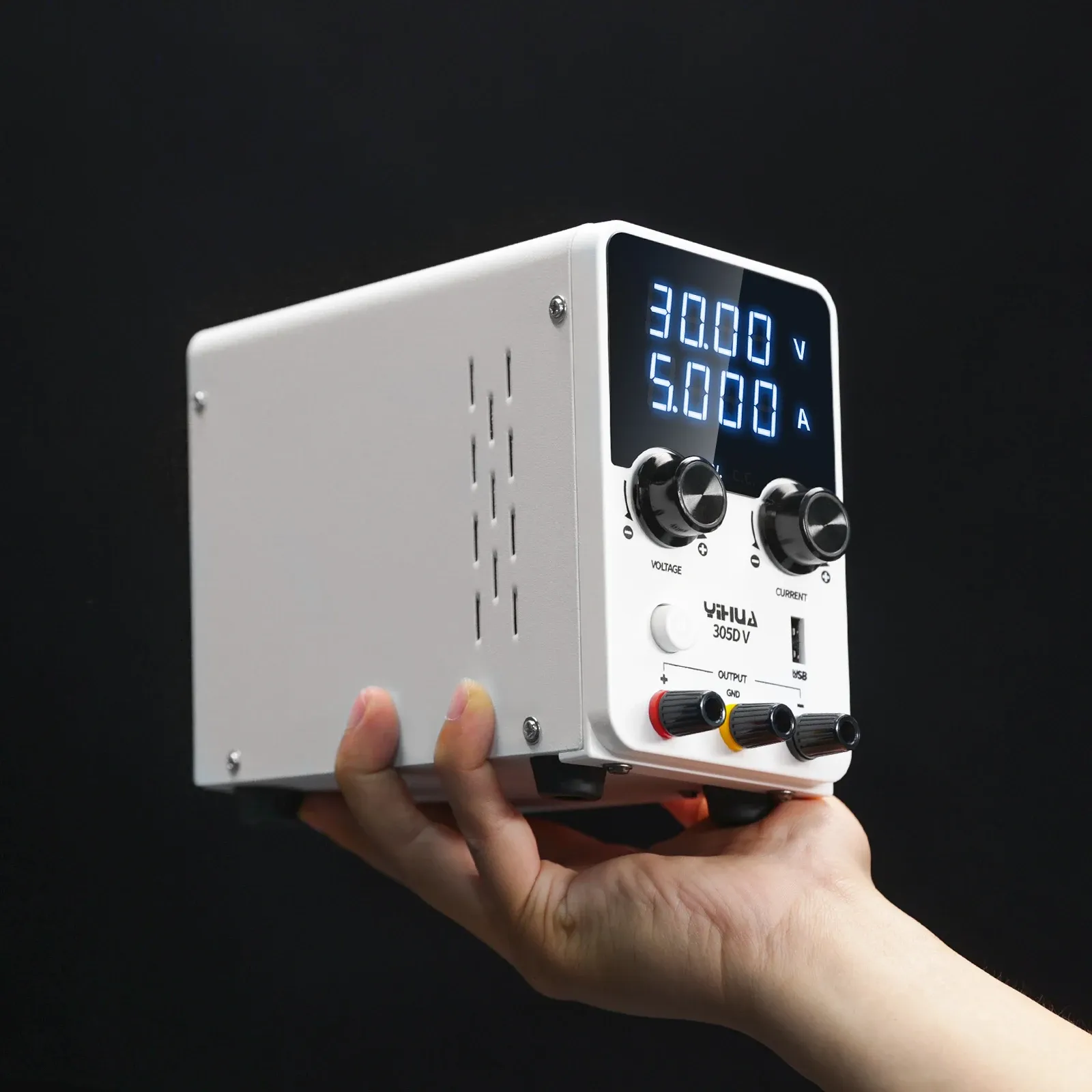
This unit uses a single output channel, which keeps the front panel simpler and easier to read at a glance. For technicians who work on one device at a time, that simplicity can be a benefit, especially when the goal is quick diagnosis rather than multi-channel experimentation.
Users who leave positive feedback often mention the build quality and precision, and one reviewer called it a must-have for phone technicians. That matches the product’s positioning well: it is not trying to be a lab monster, but a dependable daily tool for focused electronic repair, so where does it fit best?
Best use cases for AliExpress repair buyers
This is a strong fit for smartphone repair shops, hobbyist electronics benches, and anyone who regularly powers bare boards during troubleshooting. It also makes sense for makers who want a controlled source for prototyping, because a regulated supply is safer and more informative than a random wall adapter.
The main caveat is voltage selection discipline. A few customer comments show that buyers can run into trouble when they expect a regional mains setting rather than a DC bench supply, so the important question is not whether it works, but whether your workflow actually needs a 0-30V regulated source.
What stands out after comparing it with cheaper bench options?
Cheaper supplies often cut corners on display clarity, regulation, or current stability, which becomes obvious when the load changes. The 305D-V looks like a better match for users who value repeatable readings and a controlled output more than flashy extras.
- Precise voltage control for sensitive board work
- Up to 5A output for common repair tasks
- Stable regulation under changing load
- Simple single-output layout for fast setup
- Useful for phone repair, prototyping, and diagnostics
- Compact bench footprint for small workspaces